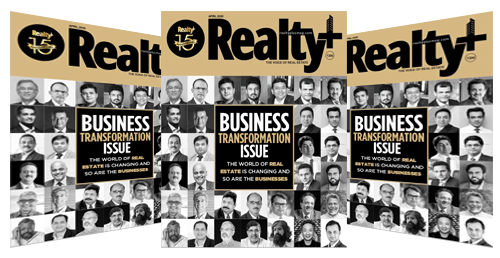


2030 sounds far away—until you realize it’s basically tomorrow in Indian economic lingo. The ambitious aim is for a $7.3 trillion GDP and becoming the world’s third-largest economy, powered by high domestic demand, reforms, and global engagement. As 2025 draws to a close, India stands at an inflection point. This is the time, when India should swap jugaad for clear systems, speed for sustainability, and ambition for execution to get a long-overdue upgrade. To achieve its mission in next five years, the government focus has to be on inclusive growth, a trillion-dollar GCC sector, and livability through smart cities and green energy. For real estate, 2025 marked a shift from recovery to recalibration—where capital became cautious, buyers more discerning and developers more strategic. The sector is all set to transform into a high-growth, diversified, and tech driven sector — with higher sustainability standards, and deeper investor participation.
Indian stands at an inflection point. This is the time, when India should swap jugaad for clear systems, speed for sustainability, and ambition for execution to get a long-overdue upgrade.
India Under Construction At Scale
India is experiencing construction boom, driven by rapid urbanization, substantial government capital expenditure and private investment, With over 70% of future economic activity expected in urban areas, there is a massive demand for housing, commercial spaces, and urban infrastructure like metro rail networks and smart cities. The residential real estate market is projected to reach over $857 billion by 2030 while the construction sector is projected to scale to $1.4 trillion by 2047 and contribute up to 14-20% to the GDP. The next five years will decide whether India builds cities people admire—or cities people endure. But one thing is sure, sustainability will no longer be a buzzword, technology won’t be optional and poorly planned sprawl won’t get a free pass.
Real Estate Impact by 2030
India’s urban population is expected to cross 600 million. An additional ~70 million homes will be needed. Co-living inventory is expected to triple. REIT Market is expected to reach ₹19.7 trillion. GCCs are expected to create demand for 160-200 million sq. ft. of office space. Flex workspaces projected to capture nearly half of GCC office space demand. India’s senior living market size projected to hit $8-12 billion. Indian malls to attract $3.5 billion in three years and Retail REIT to reach a value of ₹60,000–₹80,000 crore in five years. Hospitality sector is expected to see robust CAGR (around 13-14%), reaching $45 billion. Warehouse real estate projected to double to over 700-885 million sq ft. The construction industry overall (including infrastructure) could reach USD 2.13 trillion
Future Active Blueprint
If 2025 will be remembered as the year Indian real estate paused, assessed and prepared with the narrative shifting decisively to growth at scale. The real estate sector strengthened its fundamentals, aligned with infrastructure momentum and prepared for a more responsible growth phase. As the industry turns its gaze towards Vision 2030, the emphasis is clear: smarter cities, sustainable development and enduring value. Cities, corridors and communities will have to be planned for long-term rather than short-term cycles. The Speed Bumps on India’s Fast Lane Building the future is exciting, but then there is the real plot twist. Approvals still enjoy long holidays, timelines stretch like yoga instructors, and coordination between agencies remains a competitive sport. Then there’s urban overload. Cities are growing faster than their infrastructure and Smart cities still need smarter basics: water, waste, and roads that don’t disappear during monsoons. Affordability is another tightrope. The real demand is for homes that are well-priced, well-connected, and well planned. And finally, technology adoption is uneven, data is messy, while true climate resilience needs tougher choices, higher costs, and long-term thinking. India’s vision 2030 cannot be built on ambition alone—it’ll need discipline, delivery, and the courage to fix potholes first.
Every Year Tells A Story
2025 penned real estate story of discipline, direction and quiet confidence. It reminded the industry that lasting growth is built on strong foundations—policy stability, infrastructure investment and evolving consumer aspirations. The coming years will reward those who build with purpose, resilience and long-term vision. The future is not waiting to be imagined; it is already under construction and the road to Vision 2030 feels both ambitious and achievable. Stepping into the second half of this decade, India’s Vision 2030 centers on becoming a global economic powerhouse, leveraging digital transformation and robust infrastructure along with inclusive & sustainable development.
E - PAPER

CURRENT MONTH

LAST MONTH
BIG DREAMS, BIGGER BLUEPRINTS
Vision 2030 isn’t a utopian sketch. It’s messy, massive, and unmistakably Indian— where infrastructure meets aspiration, policy meets profit, and cities compete not just to be bigger, but smarter.
 BY
Sapna Srivastava
BY
Sapna Srivastava
Published - Sunday, 15 Feb, 2026

RELATED STORY VIEW MORE
DATA CENTRES COULD CREATE 195 MILLION SQ. FT HOUSING DEMAND BY 2030
WHEN REAL ESTATE MARKETING SELLS MORE THAN HOMES

MUMBAI DRIVES 65% OF MMR LAUNCHES, 70+% OF SALES IN Q2 2026
TOP STORY VIEW MORE

Wall Plaster Cracks and Peels: What Causes the Damage and How to Fix It
Hairline cracks, dampness and poor plaster adhesion can lead to surface damage. Identifying the cause early helps homeowners choose the right repair method and prevent recurring problems
16 October, 2026

NEWS LETTER
Subscribe for our news letter
E - PAPER
-
CURRENT MONTH
LAST MONTH