


Cities are evolving at a fast pace and so are the built spaces- their social, cultural and economic repositories. With the advent of rapid urbanization, a record breaking 10 billion people will be living in cities by 2050, exacerbate the pressure on already crippling urban centres. Albeit, the compounded effect of uncontrolled urbanization and the climate change crisis have ushered a change in the way buildings have been designed in the past. Today, architects, designers and urbanists no longer work in silos but rather coalesce together to tackle the challenges faced by the built environment. Shaping the future of architecture - from futuristic cities, to houses, and even to product design, innovation lies at the convergence of design, technology and sustainability and could be summarized into the following:
Vernacular Architecture
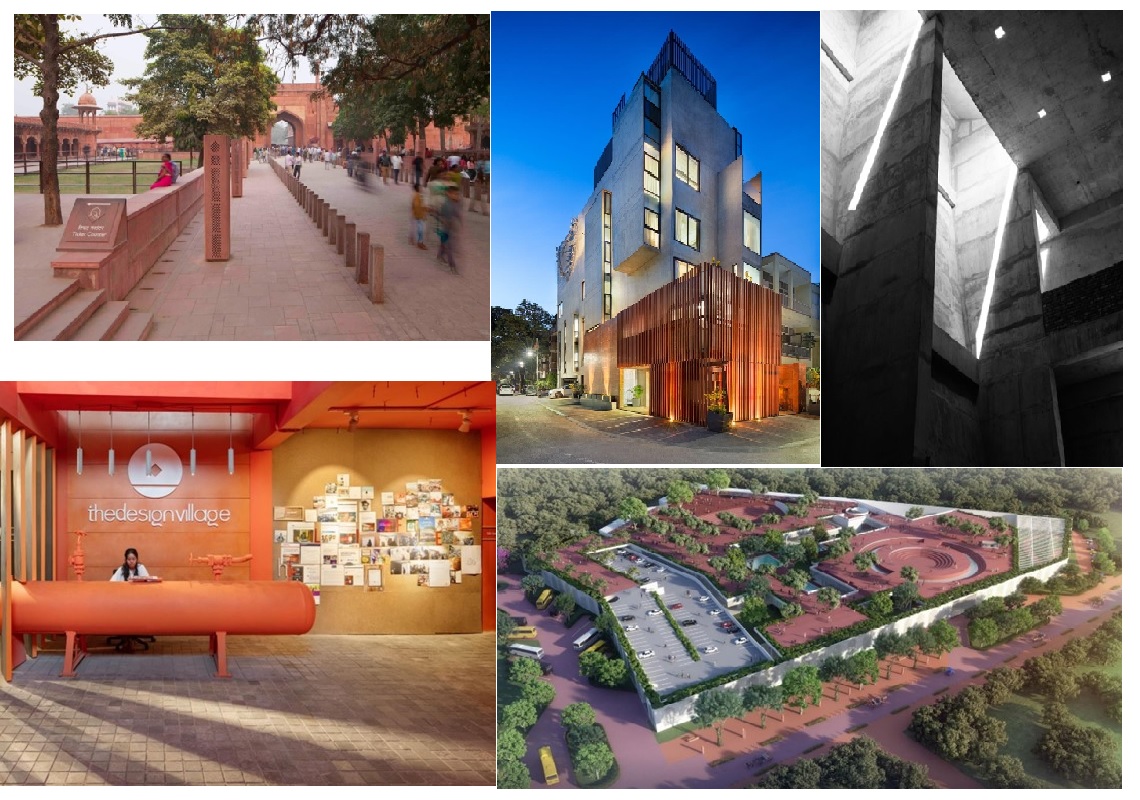
Vernacular architecture emphasizes on using locally available traditional materials and resources. Adhering to basic principles of green architecture, materials and resources from the close proximity to the site would add to the overall construction process being energy efficient, cutting down carbon emission by minimizing the transportation cost. Furthermore, vernacular architecture celebrates the native knowledge of buildings to effectively design spaces of symbolic significance to the local communities with a strong sense of place and identity. Tajganj redevelopment is no doubt an exemplary project that is built on the foundation ground of vernacular architecture.
Minimalism
Buildings designed with the philosophy of minimalism send the wider message of simplicity- “less is more”. The chaos free and clean geometric forms, elements without decoration, simplistic materials convey a sense of order without compromising the functionality. As argued by Mridu Sahai, partner at Archohm, “the modern and minimal architecture approach gives maximum power to the spatial quality of space making. It rejects decoration and promotes rationalized decision-making, making architecture long-lasting and versatile.” As contemporary architects, archohm deliberately designs spaces that are simple, modern and minimalist and stand out in the chaotic urban context. From Tajganj Redevelopment to Mumbai metro and to the striking residences in Delhi-NCR, their designs are simple and clear.
Multi-generational living
While contemporary lifestyles promote nuclear living in metropolitan cities, the real estate prices have skyrocketed. A household where at least two generations can co- exist and live in harmony might offer a viable solution. With multi-generational living, the home dwellers will occupy less space than two or three distinct housing blocks. This design and lifestyle tactic would considerably reduce living expenses, fortify family ties, provide emotional support and eventually result in a sense of belonging and security. South Ex residence, colloquially known as the portrait in Concrete by Archohm Studio is a classic example of the same. Nestled inside the dense fabric of South Ex, this residence was designed to meet the needs of three generations.
Adaptive Reuse
While the earlier practice of adaptive reuse was more inclined towards economic revival, contemporary adaptive reuse architecture has since evolved. The focus today is on restoration, preservation and sustainability as moral, ethical and environmental considerations. Moreover, with environmental legislation in place and the impact of climate change being evident than ever before, designers and architects have redirected their focus to adaptive reuse. In 2017, when The design village (TDV), an interdisciplinary industry-centric educational institute - decided to move its existing campus to a larger premise, an abandoned Kattha (catechu) factory in the same neighbourhood emerged as a viable alternative.
Daylight Design
Daylighting design strategies promote the idea of collecting natural light and reflect it into darker areas of the building. Consciously designed well lit spaces would eventually reduce the dependence on mechanical lighting and enhance the energy efficiency of the building. Daylight design elements can range from apertures, skylights, clear doors, mirrors, light shelves and other reflective surfaces. Studio archohm has always abided by a simpler rule of efficiently incorporating daylight into their designs. For instance, with every building they have designed, the architects have promulgated the playfulness between built masses and the glazed apertures. They hid the views wherever it barged into the privacy and created enough lighting to convey warmth and winsomeness.
Regenerative Architecture
Regenerative architecture engages with nature as the medium and advocates for incorporating it within the design as if the built and the natural are a coherent one. Adapting building design to the natural features is what regenerative architecture stands for. So, when archohm was commissioned for urban regeneration of Shilpgram, Agra into an interpretation centre for Taj Mahal, both the challenge and innovation emerged from the objective to preserve two hundred existing trees on the site. Archohm preserved the existing trees through designing cavities and apertures in ceilings and walls wherever the functional aspects allowed and transplanted some of the existing trees within the same site, all in the spirit of regenerative architecture.
Climate sensitive urban design
Another innovative design approach is Climate Sensitive Urban Design (CSUD). CSUD utilizes approaches viz land use planning, urban greening, urban geometry design to mitigate climate change impact. In doing so, it emphasizes on building climate resilient urban centres wherein architects, designers, planners and city administrators coalesce to collaborate. The Tajganj Redevelopment, Agra, is one such project by studio archohm that emerges from the design underpinnings of CSUD. The tale of Tajganj reflects on the spatial configuration of green spaces sustainable materials and minimalism imbibed together as major modifiers for the urban microclimate.